The 2 A.M. Test for Your Travel Kit
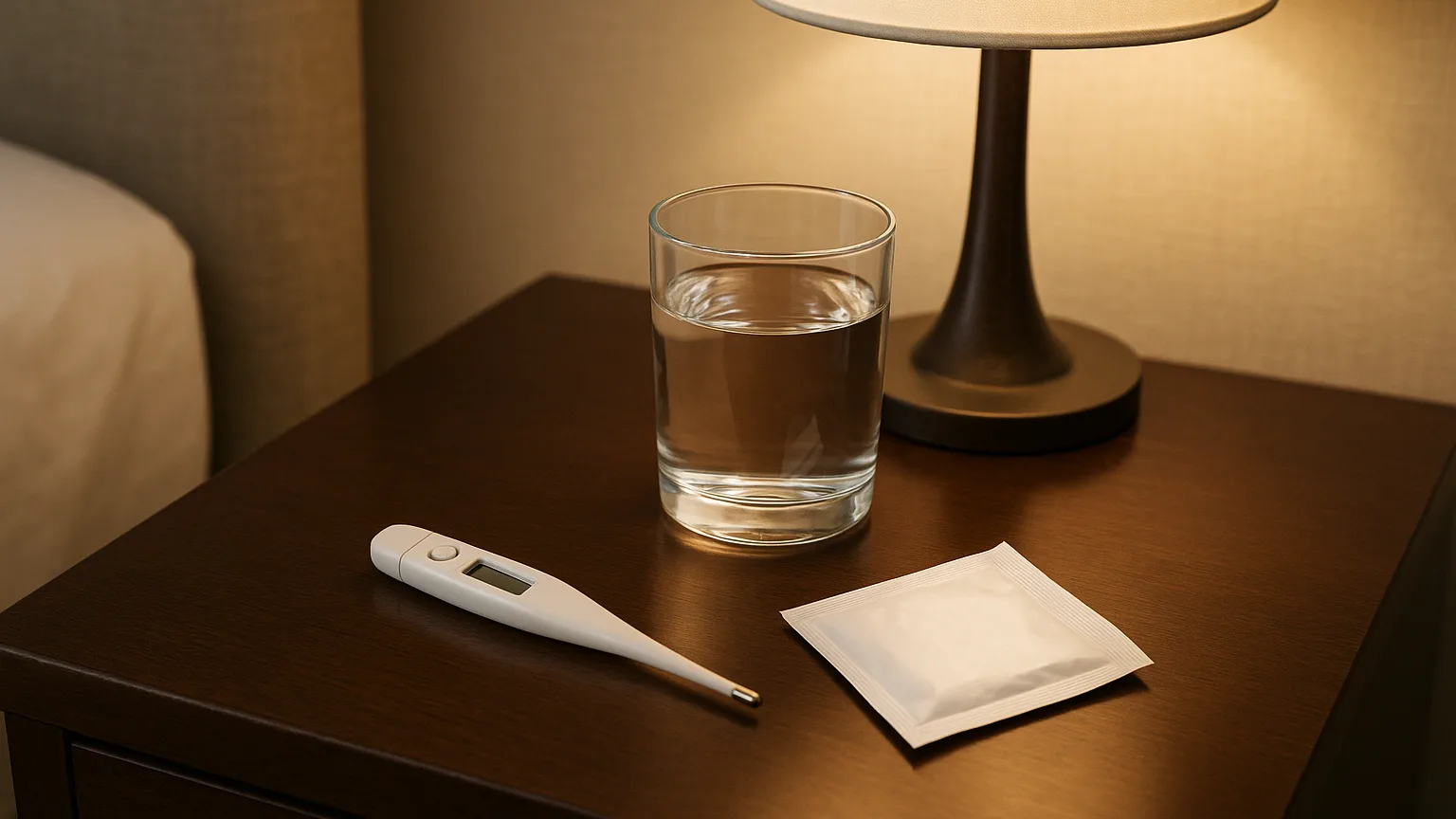
Most travel kits are packed for daytime problems: a scraped knee, a mild headache, a bug bite. But most travel health scares don't happen at noon near a pharmacy. They happen at 2 a.m. in a hotel room where you don't speak the language and the front desk is closed.
So ask one question about each item: would this help me at 2 a.m. with no store open? The six items below pass that test. Each one is small, cheap and easy to forget.
This list is for regular leisure trips, like beach weeks, city breaks and family visits. Staying well on the way there has more to do with habits than gear, which is why we look at why sanitizer falls short in a separate piece.
1. Oral Rehydration Salts
Traveler's diarrhea is the most common illness on a trip. It is usually not dangerous by itself. The real danger is losing water and salt faster than you replace them. Plain water doesn't replace salt, and sports drinks have too much sugar and too little salt to do the job well.
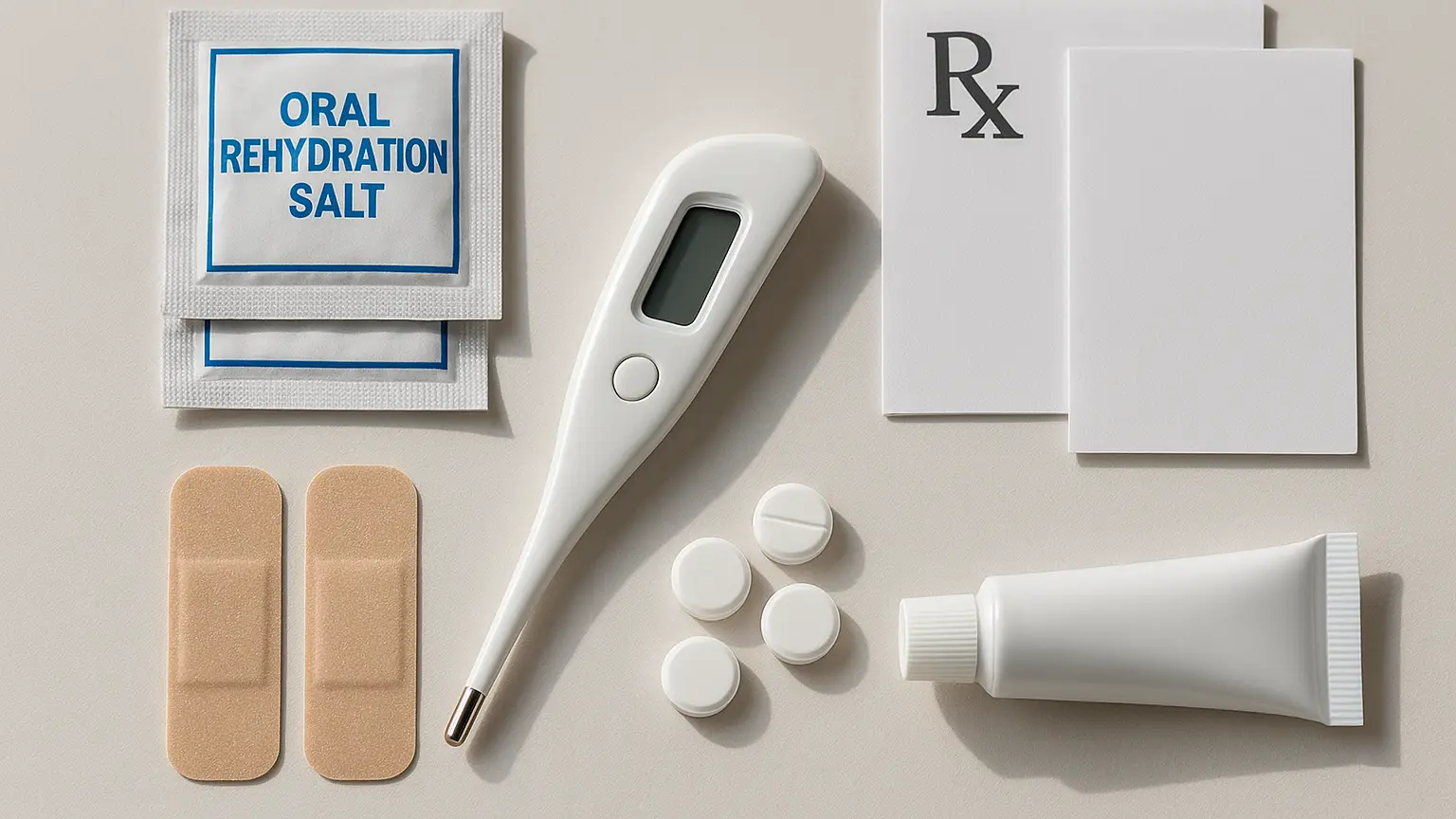
Oral rehydration salts, often called ORS, come in small packets you mix with clean water. Pack at least six packets per person.
- When to use it: after the second or third loose stool, or after heavy vomiting.
- How to use it: mix with the exact amount of water on the packet, then take small sips every few minutes.
- Watch for: very little urine, dizziness when standing or a dry mouth. These mean you need more fluid, and possibly a doctor.
Children and older adults dry out faster, so start ORS early with them.
2. A Digital Thermometer
Feeling hot is not the same as having a fever. A thermometer turns a guess into a number, and that number changes what you do next. A low fever with a cold can usually wait. A high fever after a trip to a malaria area needs a doctor the same day.
Choose a small digital model with a hard case, not the glass kind. Log your readings and the times on your phone, so if a doctor asks how high it went and for how long, you have a real answer.
As a rough guide for adults, 100.4°F (38°C) or higher counts as a fever. One that stays above 103°F (39.4°C), or any fever with a stiff neck, confusion or a rash, means you should get help right away.
Paperwork, Patches and Two Quiet Lifesavers
3. Copies of Your Prescriptions
Bags get lost. Pill bottles get left in rental cars. A photo of a pill bottle is not enough, because a pharmacist or doctor abroad needs to know exactly what you take. Ask your doctor for a short printed list, or make one yourself, with:
- The generic name of each drug, not just the brand name. Brands change from country to country. Generic names mostly don't.
- The dose and how often you take it.
- Your doctor's name and phone number.
- The reason you take it, in plain words.
Keep one paper copy in your carry-on, one in your checked bag and a photo on your phone. Some countries limit certain drugs, like strong painkillers, ADHD medicine and sleep aids, so check the rules before you fly. A doctor's letter can help at the border.
4. Hydrocolloid Blister Patches
Travelers walk far more than they do at home, and new sandals plus a hot day can mean an open blister by lunch. A regular bandage slides off and lets dirt in. A hydrocolloid patch seals the blister, cushions it and helps the skin heal.
Put one on at the first hot spot, before the blister even forms, and leave it until it peels off on its own. Pulling it early can tear the skin. A small pack weighs almost nothing and can save a whole day of sightseeing.
5. An Oral Antihistamine
New plants, foods, bugs and laundry soap can all cause hives, itching or a sudden runny nose. A non-drowsy antihistamine handles most mild reactions, and a drowsy one can help with itchy bites at night.
But know the limits. An antihistamine does not treat a severe allergic reaction. If you have ever needed an epinephrine pen, bring two and keep them on your body, not in your suitcase.
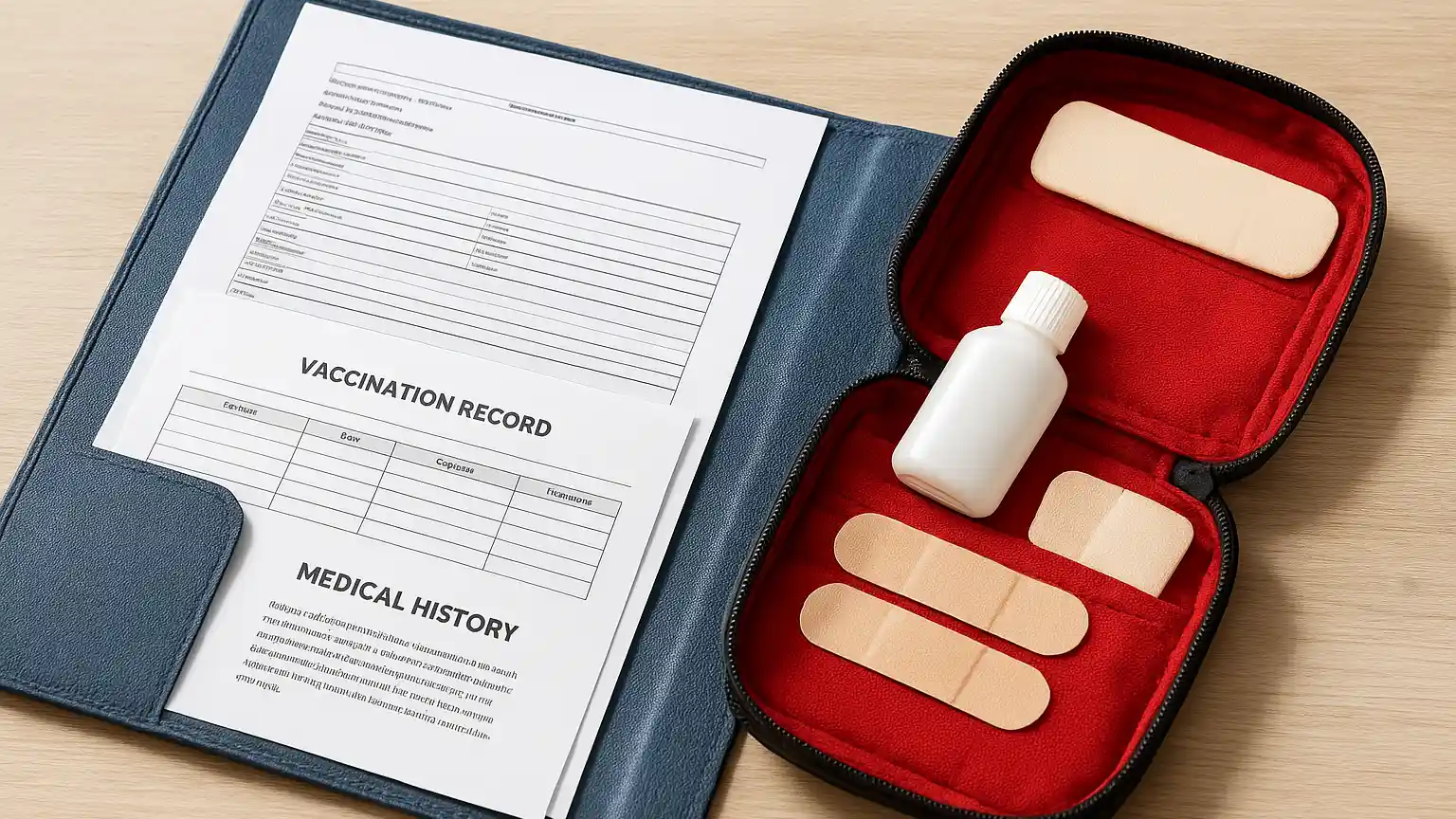
6. A One-Page Health Card
This is the item almost no one packs, and it may matter most. If you are sick, hurt or confused, you may not be able to explain your own health history. A card in your wallet can do it for you. Include:
- Your full name, date of birth and blood type if you know it.
- Allergies, especially to medicine.
- Ongoing conditions such as diabetes, asthma or heart disease.
- Your travel insurance policy number and its 24-hour phone line.
- Two emergency contacts at home.
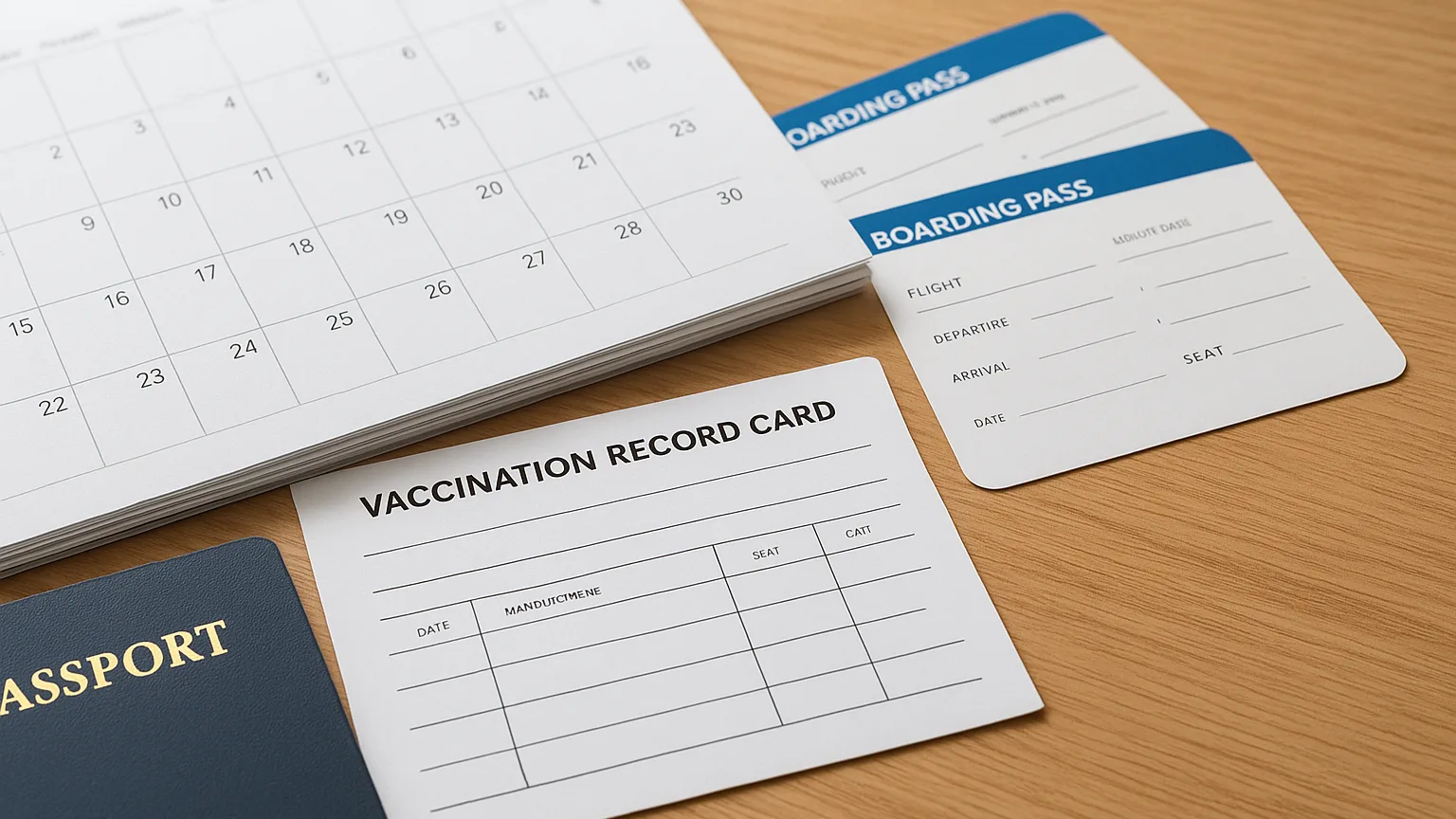
If the local language isn't yours, translate the allergy line. A single sentence like "I am allergic to penicillin" can prevent a serious mistake. Your vaccine record belongs here too. Check what you need well ahead, since many shots take weeks to work and you may already be inside your vaccine timing window for a summer trip.
Tailoring the Kit to Your Body and Your Route
The six items above are a base. Your health and your destination decide what goes on top.
If You Live With a Chronic Condition
The basic rule: pack twice what you need and split it up. Put half your medicine in your carry-on and half in a travel partner's bag or your checked bag, never all of it in checked luggage. Keep each drug in its original labeled box so it matches your prescription copy. Some extras by condition:
- Diabetes: extra testing strips, a backup meter, fast sugar like glucose tabs and a cooling pouch for insulin.
- Asthma or COPD: a spare inhaler and a written action plan from your doctor.
- Heart conditions: a copy of your latest ECG on your phone and a list of your blood thinners.
- Bladder or bowel conditions: extra supplies, a plan for fluid timing on travel days and a note for airport screening.
Time zones can upset your dosing schedule. For once-a-day drugs, many people shift the time by an hour or two each day. For insulin or other time-sensitive drugs, ask your doctor for a plan before you leave.
Bladder issues are a common reason people skip trips or cut fluids on travel days, and that second habit often backfires. "People think drinking less on a flight will mean fewer bathroom trips, but it concentrates the urine and can make urgency and infection risk worse," says Rachel Hendry, senior travel health advisor at Inter Health. "With a bit of planning around fluids, seating and screening, travelling with bladder conditions becomes far more manageable," she adds, pointing travelers toward travel tips for bladder conditions before they book.
If You Are Heading Somewhere Remote
A city trip lets you buy what you forgot. A safari, a small island or a mountain trek does not, so your kit has to do more on its own. Talk to a doctor about:
- A standby antibiotic for severe traveler's diarrhea, with clear instructions on when to start it.
- Malaria tablets if the area calls for them.
- A water filter or purifying tablets so you can safely mix your ORS.
- Altitude medicine if you will sleep above about 8,000 feet.
- A larger wound kit with gauze, tape and wound closure strips.
Before you leave, find the nearest real hospital and how you would get there, then save it on your phone and write it on your health card. Check that your travel insurance covers medical evacuation. It is cheap to add and very costly to need without it.
How to Pack It So You Can Use It
A kit buried at the bottom of a suitcase is a kit you won't use. Keep it in a clear zip bag in your day bag. Check the dates before each trip, since ORS and medicine both expire. And tell your travel partner where the kit is and what the health card is for. If you are the one who gets sick, they need to know.
Pack for the Night Nobody Plans For
A good travel medical kit isn't about carrying a pharmacy. It is about six small things that fill the gaps most kits leave open: oral rehydration salts for stomach bugs, a thermometer to read a fever clearly, prescription copies with generic names, blister patches for long walking days, an antihistamine for surprise reactions and a one-page health card that speaks for you when you can't.
Build around your own body and route, and run each item through the 2 a.m. test before you zip it up. If it would help you alone in a dark hotel room far from home, it has earned its spot.